
Using Tallow in Basketmaking
Tallow and greasehorns are traditional tools in basket making that help with several of the most fiddly tasks in weaving. They’re simple, durable, and especially useful when working with willow and other natural rods.
A greasehorn is typically a hollowed cow’s horn packed with tallow (rendered animal fat) and sometimes horsehair or cheesecloth. The bodkin is inserted into the greasehorn so the tip becomes lightly coated with fat before use. This small amount of lubrication makes a big difference when inserting rods and working tight areas.
Using a rag or your finger to rub tallow on your tools has the same effect and saves finding/buying a horn, but may take a bit longer. Our jars have the added benefit of a cap. Closing up your tallow makes it easier and cleaner to store as well as last longer.
When and why to use tallow/greasehorn
Opening tight spaces: Tallow on the bodkin helps the tool slide between rods without catching, creating space for a stake or for repositioning weavers.
Inserting stakes into the base: When you need to push stakes tightly into a base, a greased bodkin eases the movement and reduces splitting or tearing of the material.
Handle work and bows: Forming and seating a handle or bow often requires forcing rods into place; tallow lubricates the contact points so rods bend and seat more smoothly.
Tight border and finish work: The small, controlled lubrication is ideal for the close, exacting work at borders and rims where excess friction can ruin the finish.
Applied directly to the rod: In some cases a small dab of tallow can be rubbed onto a rod’s end to help it slide into place.
Practical tips for using and storing tallow
Apply sparingly. A little tallow goes a long way; excess will make things greasy and attract dust.
Keep it on the bodkin or in the rod tip. Either keep the bodkin in the greasehorn between uses or lightly coat the rod end before inserting.
Store cool and shaded. Tallow will melt in heat and can spoil if exposed to sun or warm conditions. Keep your greasehorn or tallow container in a cool, dry place.
Watch for rancidity. Tallow is usable until it smells off. If it develops a strange or rancid odor, replace it.
Clean occasionally. If tallow picks up dirt or plant debris, clean and refresh the greasehorn to avoid transferring contaminants to your work.
Safety and materials: Tallow is a natural product; some makers prefer plant-based waxes or commercial lubricants, but tallow remains favored by many traditional weavers for its historical authenticity and effectiveness. If you use animal-derived tallow (like ours), be mindful of storage and possible sensitivities.
Using tallow and a greasehorn is a small, low-tech practice that yields smoother, cleaner basketry—especially when working willow rods. It preserves the material, reduces breakage, and helps achieve tight, neat joins in bases, rims, and handles. At Northwest Willow we value these heritage techniques as part of good craft practice; if you’re working with willow tallow is worth keeping in your toolkit.
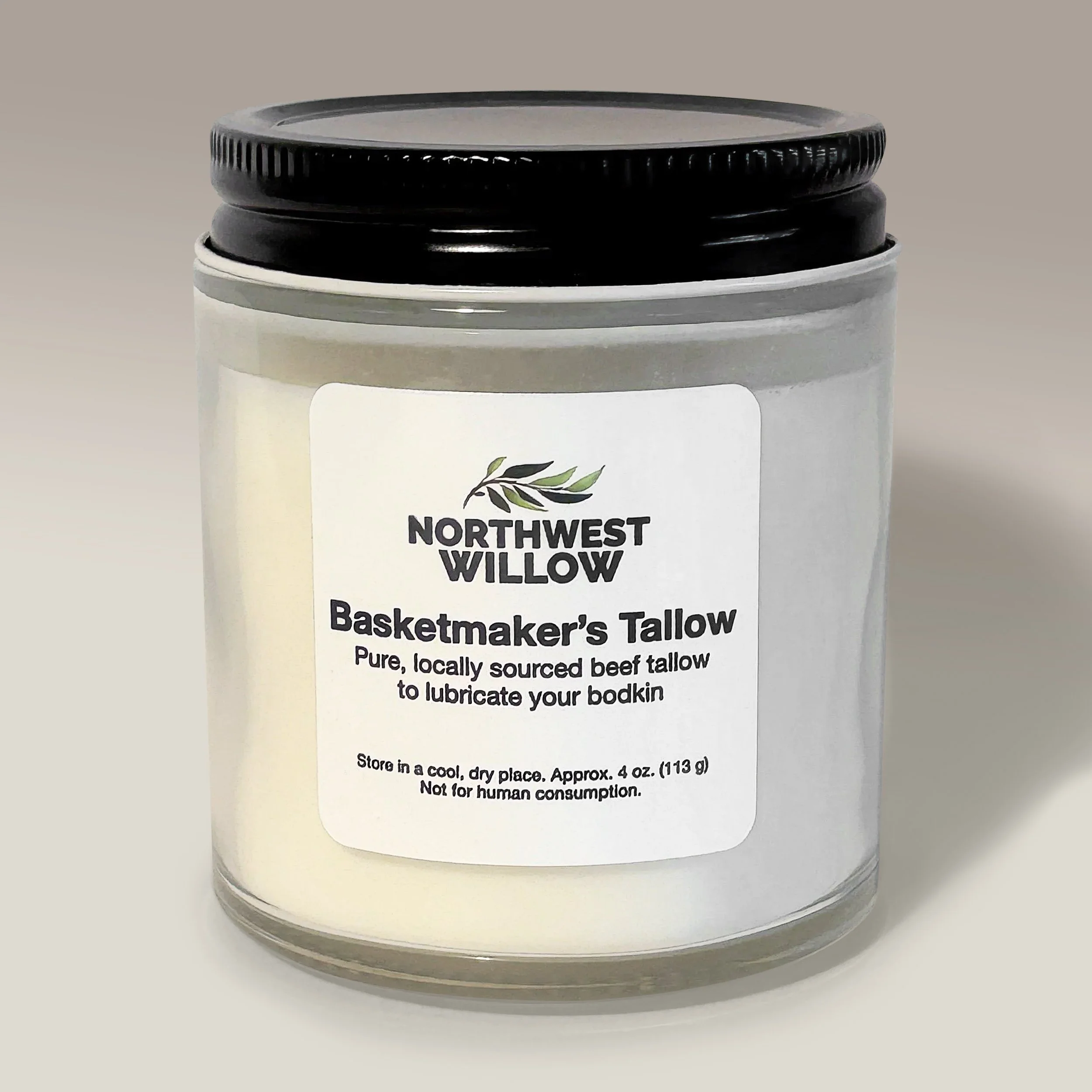
Pure, locally sourced beef tallow. A firm, natural lubricant to ease bodkin use and help seat rods into tight spaces.
Format & weight: Approximately 4 oz (113 g).
Sourcing: Rendered from locally raised beef fat.
Storage: Keep in a cool, dry place away from direct heat or sunlight.
Safety: For tool and craft use only — not for human consumption.
Usage tip: Warm the tallow slightly in your hands or rub the bodkin directly across the surface to pick up a thin, even coating before working in tight areas. Use sparingly to avoid transferring excess onto materials.
Pure, locally sourced beef tallow. A firm, natural lubricant to ease bodkin use and help seat rods into tight spaces.
Format & weight: Approximately 4 oz (113 g).
Sourcing: Rendered from locally raised beef fat.
Storage: Keep in a cool, dry place away from direct heat or sunlight.
Safety: For tool and craft use only — not for human consumption.
Usage tip: Warm the tallow slightly in your hands or rub the bodkin directly across the surface to pick up a thin, even coating before working in tight areas. Use sparingly to avoid transferring excess onto materials.